

Ensuring Impact: The Role of Certification in Carbon Credits
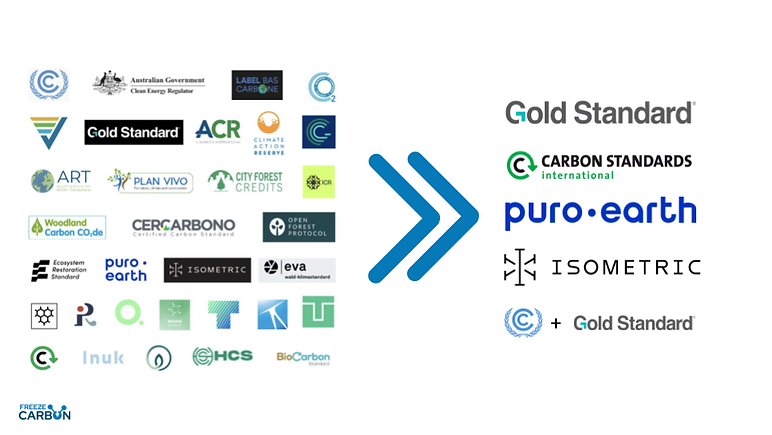
Imagine your company has committed to achieving net-zero emissions. You’ve analyzed your processes, reduced everything possible, and are now looking for high-quality carbon credits to offset the remaining emissions. You want your efforts to count—to make a real impact on climate protection and align with your values. But as you explore your options, you face a sobering reality: the world of carbon credits encompasses over 30,000 projects and more than 30 certification standards, not all of which are trustworthy. Some rely on questionable calculations, while others fail to ensure that the certified projects deliver long-term benefits.
At Freeze Carbon, we understand how overwhelming this process can be. Like you, we believe that every credit should represent genuine impact. That’s why we go beyond surface-level evaluations to ensure that every project in our portfolio is thoroughly vetted for quality, transparency, and long-term effectiveness.
Different Certification Standards
To ensure that carbon credits deliver real and lasting impact, renowned certification standards play a critical role.
-
Gold Standard ensures that projects align with at least three UN Sustainable Development Goals (SDGs), promote both environmental and social impacts, and adhere to strict additionality rules, while completely avoiding high-risk projects like REDD+ (forest protection projects).
-
Carbon Standards International excels in developing regions, combining climate action with social benefits such as poverty reduction and gender equality.
-
Puro.Earth focuses on biochar and direct air capture, combining regular monitoring with long-lasting carbon removal solutions.
-
Isometric certifies advanced carbon removal solutions like biochar and enhanced rock weathering, ensuring precise and durable carbon storage.
Pillars of the Certification Process
Each certification standard evaluates projects on a set of core principles to ensure effectiveness and accountability. These principles typically include:
-
Measurability: Ensuring that the carbon reductions are quantifiable and verifiable over time.
-
Permanence: Confirming that the carbon sequestration or reduction is lasting, with safeguards to prevent reversal.
-
Additionality: Verifying that the project could not have occurred without the investment from carbon credits.
-
Leakage: Ensuring that emissions reductions in one area do not inadvertently cause increased emissions elsewhere.
This process includes several steps, from project design to independent verification and ongoing monitoring. While these principles help standardize quality, even the most trusted certifications are not foolproof, and limitations in any of these areas can impact a project’s true effectiveness.
Why Freeze Carbon Goes the Extra Mile: EMQA
Even with reputable certifications, how can you be sure the projects deliver on their promises? At Freeze Carbon, we’ve implemented the Extra Mile Quality Analysis (EMQA) to give you that confidence.
Picture this: you’re evaluating a reforestation project. On paper, it looks great—thousands of trees planted, certified by a leading standard. But what if the project didn’t account for poor soil conditions or lack of community support, leading to high seedling mortality? That’s the kind of risk EMQA is designed to eliminate. We dig deeper, assessing project integrity, scrutinizing calculations, and confirming that each initiative can stand the test of time. Only about 10% of certified projects meet our rigorous standards.

Selecting the Right Certified Carbon Credits
Picking the right carbon credits means aligning your company’s sustainability strategy with real impact. By working with Freeze Carbon, you can be confident that every credit in your portfolio not only reduces or removes CO₂, but also supports broader environmental and social goals.
When you partner with us, you’re selecting more than a product—you’re choosing a commitment to quality, transparency, and lasting impact. Together, we can ensure your efforts make a difference where it matters most.